Forge is my philosophical tech lab. The philtech lab supports organisations and institutions in technically, critically and strategically thinking about code economy, data science, artificial intelligence, platform design and blockchain business.
Author: Cosimo Accoto
Research Affiliate at MIT | Author "Il Mondo Ex Machina" (Egea) | Philosopher-in-Residence | Business Innovation Advisor | www.cosimoaccoto.com
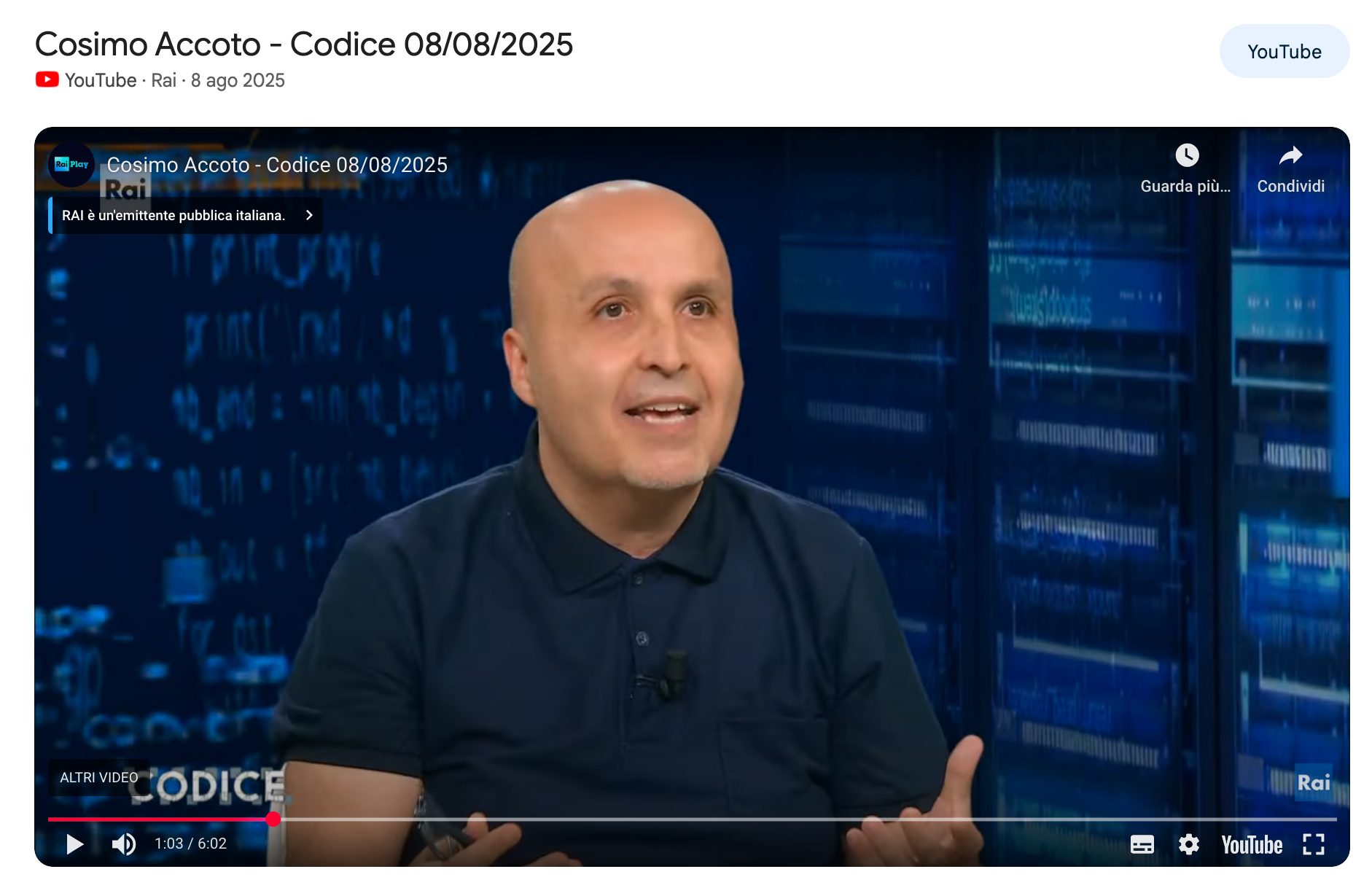
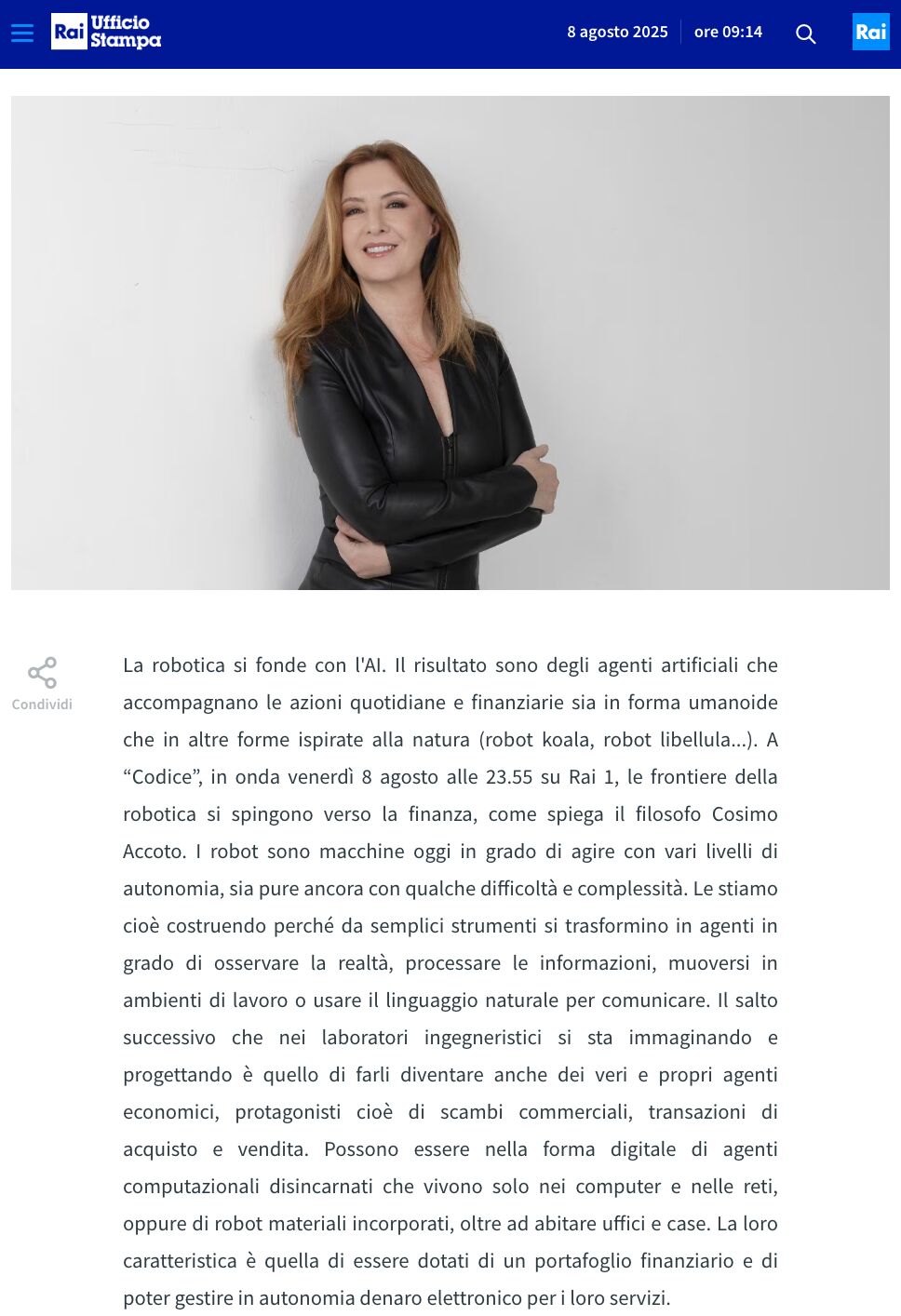
Ieri sera su RAI 1 una nuova puntata di CODICE, il programma ideato e condotto da Barbara Carfagna con un mio intervento sulle frontiere della cripto-robotica: dalle macchine parlanti alle macchine transanti. Abbiamo osservato l’orizzonte in divenire tra robotica intelligente, agente e istituente. Perchè istituente? Perchè occorre guardare non solo alla capacità strumentale della tecnica, ma anche a quella istituzionale. Dunque, non solo a quella agente, ma anche a quella istituente (non solo automazione intelligente, ma coordinamento economico). Nuovi agenti autonomi -> nuove interazioni more-than-human-> nuovi mercati automatizzati. Così abbiamo osservato non solo lo sviluppo della singola ingegneria (AI), ma anche gli incroci tra ingegnerie che stanno emergendo come quello tra AI e Blockchain. Se avete perso la puntata ed è di vostro interesse, la ritrovate disponibile su RaiPlay. Buona visione!
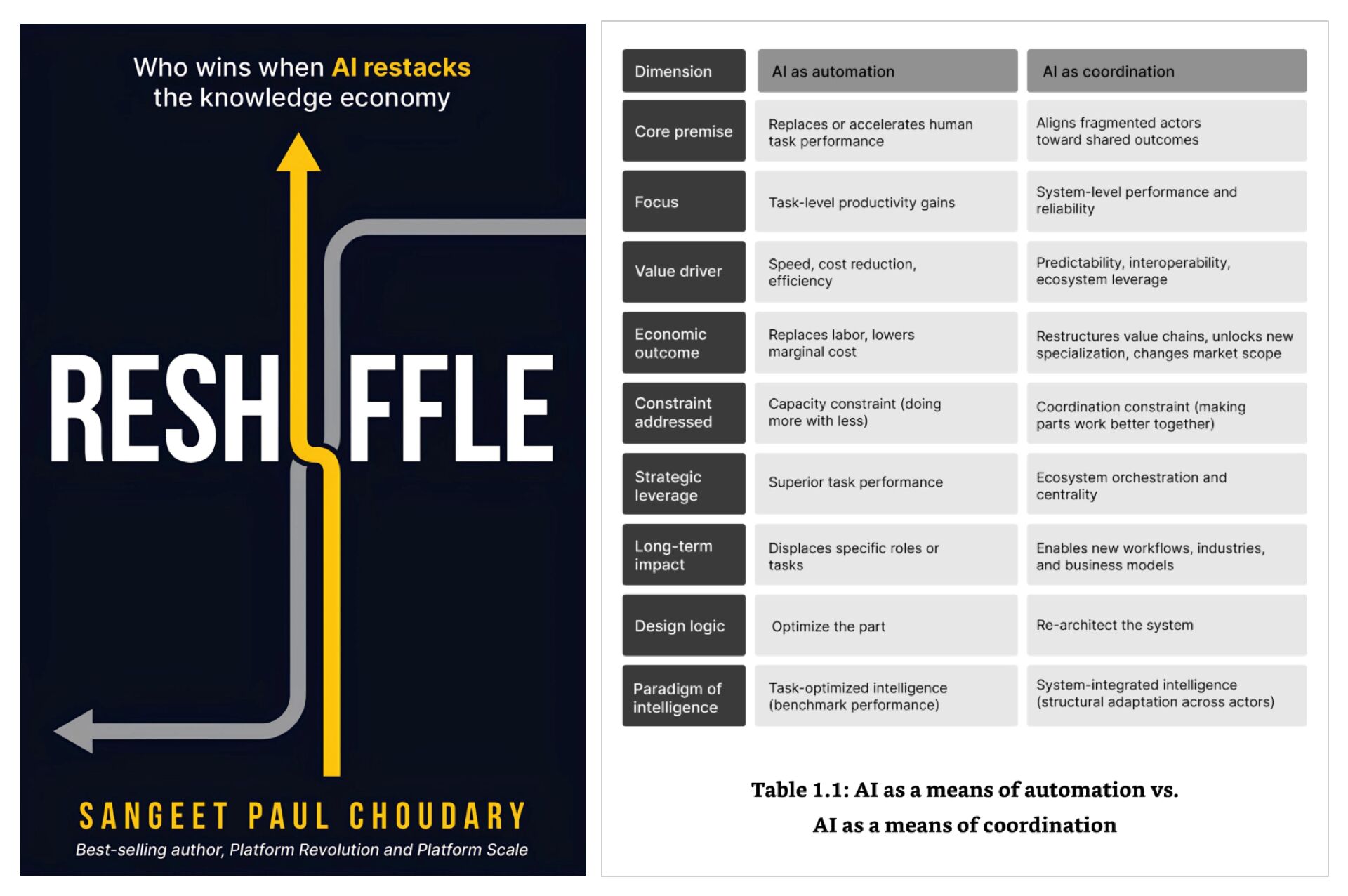
È uscito “Reshuffle. Who Wins When AI Restacks the Knowledge Economy” (Choudary 2025). E’ un saggio importante perchè porta densità di pensiero strategico sull’impatto dell’intelligenza artificiale nell’economia e nei modelli di business, nel lavoro e nelle sue trasformazioni, nell’organizzazione delle imprese e nella competizione economica. Oltre le frasi stereotipate e falsamente consolanti del “non è l’AI a rubarti il lavoro, ma qualcuno che usa l’AI”. La trasformazione in corso è molto più complessa di quanto ci raccontano e dobbiamo dotarci di lenti interpretative più sofisticate. Conosco il lavoro di Sangeet Choudary al punto che lo invitai amichevolmente e venne in Italia all’uscita dei suoi saggi precedenti “Platform Revolution” e di “Platform Scale”. Anche questo saggio ci aiuterà a leggere meglio il presente tempo e il prossimo venturo. Come ho scritto altrove (“L’intelligenza artificiale: soluzione, sistema o istituzione?”, 2025), dobbiamo uscire dalle letture “strumentali” (AI “agente”) dell’intelligenza artificiale per abbracciare quelle “istituzionali” (AI “istituente”). Che parlano di coordinamento e di piattaforme, di decisioni e di protocolli, di competenze e di conoscenze, di stack e di infrastructure thinking, di nuovi ecosistemi di cocreazione del valore e di nuove regole della competizione globale. Automation, augmentation e ora anche coordination. Perchè l’AI è più una questione di “coordination friction” che di “task execution” come opportunamente scrive Choudary:
<< (…) Yet, to shift our lens from the technology to understanding how the technology transforms the economic systems – the institutions, workflows, and value chains – into which it is deployed, lumping these technologies under the umbrella term ‘Al’ has an often-overlooked benefit: despite their technical differences, their underlying economics are remarkably similar. The shared economic logic of these technologies rests on two key principles: their ability to dramatically increase the capacity for performing knowledge work, and their ability to simplify the coordination of such work towards greater, better, and more novel output. Whether it’s an algorithm forecasting demand or a model summarizing legal contracts, the economic impact stems from the same two forces – amplification of the capacity for cognitive labor and decision-making, and reduction in coordination friction between actors and their activities. Two factors contribute to how AI enhances both the capacity and coordination required for knowledge work. First, AI reduces the cost of task execution. Tasks that once required expensive experts can now be performed more efficiently, at a lower price, and at scale. Equally important, but far less discussed, is Al’s potential to lower coordination costs: the hidden friction that arises when people and resources need to be aligned to get something done. In most knowledge work today, that alignment is a struggle… >> (Choudary 2025, Reshuffle, credits)
Robotica intelligente, agente o istituente? Ne parliamo stasera a Codice, il programma ideato e condotto da Barbara Carfagna su RAI 1 in seconda serata, con un mio intervento sulle frontiere della cripto-robotica: dalle macchine parlanti alle macchine transanti. Perchè occorre guardare non solo alla capacità strumentale della tecnica, ma anche a quella istituzionale. Non solo a quella agente, ma anche a quella istituente (non solo automazione intelligente, ma coordinamento economico). Dunque, nuovi agenti -> nuovi mercati. E inoltre dobbiamo guardare non solo allo sviluppo della singola ingegneria (AI), ma anche agli incroci tra ingegnerie che stanno emergendo all’orizzonte (AI + Blockchain, AI + Quantum …). Non perdete la puntata: qui il comunicato stampa della RAI …
Questa è la parte dell’anno durante la quale traccio le mie linee di esplorazione filosofica arrischiata per i prossimi 12-18 mesi. Questi percorsi nascono all’incrocio di personali interessi teoretici e letture, da emergenti speculazioni culturali e strategiche e con le domande di senso che mi hanno posto imprese, organizzazioni e istituzioni promotrici dei vari phil-tech lab (i miei laboratori di filosofia delle nuove ingegnerie) già fissati in calendario per il 2025 e 2026. Dopo averci pensato e lavorato già un po’, condivido i percorsi del laboratorio/studio filosofico (FORGE) nei quali sarò impegnato per i prossimi mesi. L’orizzonte esplorativo di quest’anno è: “il destino istituente della tecnica”. Questo tema generale verrà di fatto poi declinato in cinque percorsi speculativi in tensione tra postumità (from) e prodromicità (to).
Come ho scritto altrove <<… sarà necessario che il nostro pensare intorno alle nuove ingegnerie (dalle intelligenze artificiali alle reti decentralizzate) evolva oltre la dimensione “strumentale” -con cui ingenuamente molti le analizzano ancora- per andare verso una loro interpretazione più “strutturale” e finanche “istituzionale”. È strategico cominciare a pensare, ad esempio, ai modelli linguistici su larga scala o ai registri decentralizzati a consenso crittografico o ancora alle reti di quantum communication non come mere strumentalità tecnologiche (dagli algoritmi di back-propagation ai protocolli di zero-knowledge proof ai dispositivi sim-to-real/real-to-sim e altro ancora) alla base di “soluzioni” e “sistemi”, ma come emergenti forme di “istituzioni” socio-economiche. E cioè potenziali (certamente anche arrischiate) istituzionalità più-che-umane che si affiancheranno e si incroceranno (e col tempo anche in competizione direi) con altre, diverse e più antiche istituzioni come le imprese, i mercati, le burocrazie, gli stati. Esploreremo insieme l’orizzonte tecnologico per cogliere speculativamente questa sorprendente capacità “istituente” della tecnica … >> (Accoto, “Orizzontare: disegno e destino dell’evenienza”, 2025 forthcoming)
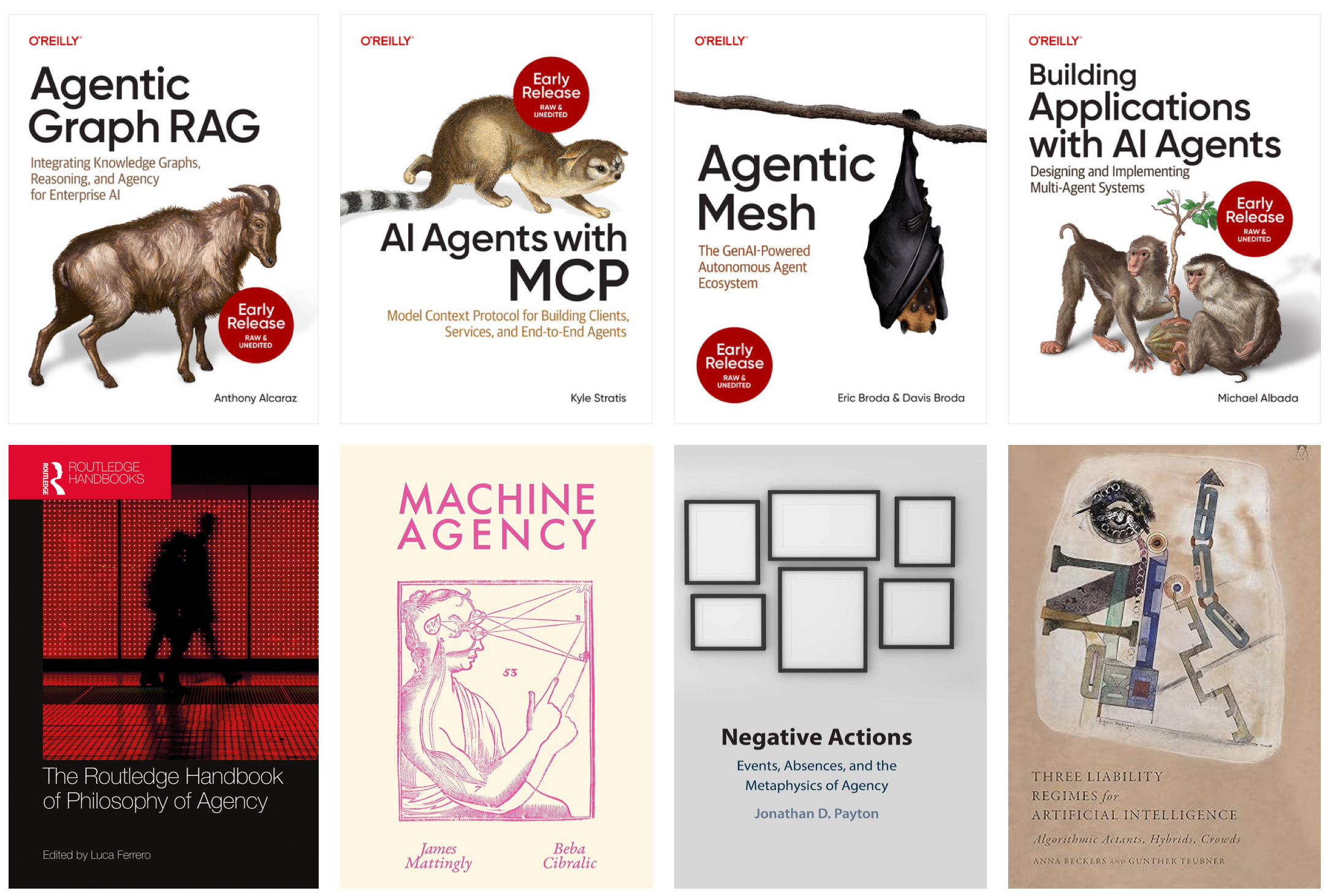
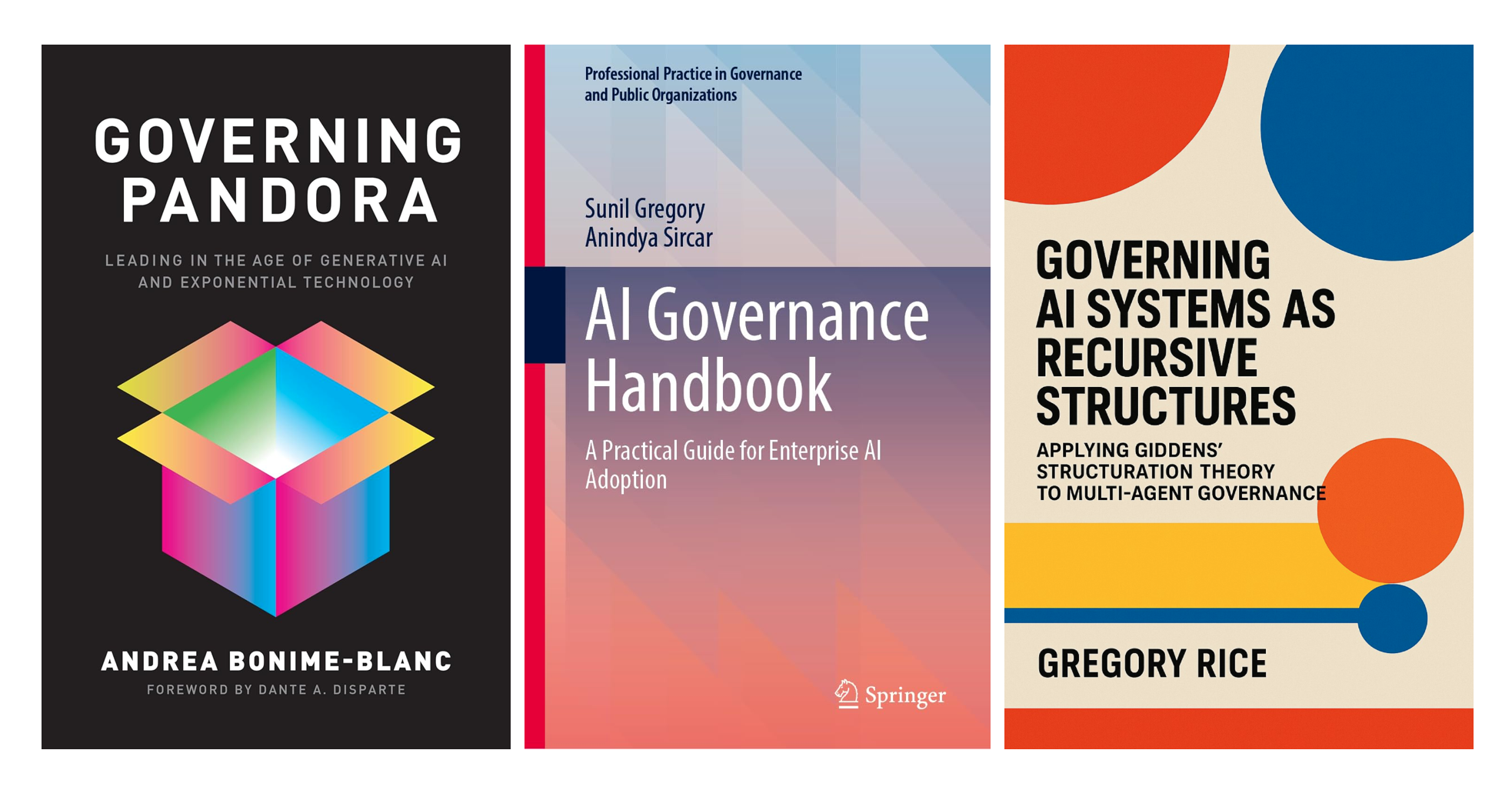
Saranno mesi, quelli prossimi, di forte sovraesposizione mediatica, ma anche di sperimentazione innovativa sulla frontiera ingegneristica dell’emergente economia agentica. Il recente evento con startup al MIT (Internet of AI Agents, luglio 2025) e le prossime pubblicazioni tecniche di O’Reilly per il 2026 (già leggibili in raw & unedited) testimoniano il fermento in divenire. Per prepararci strategicamente e managerialmente ad affrontare le molte innovazioni culturali che ci attendono, la mia personale lista di testi in uscita o appena usciti che toccano il tema tra ingegneria (prima riga) e filosofia (la seconda).
“… Nell’era degli ecosistemi multi-agentici, la cocreazione di valore sarà un dispositivo “catallattico” (di scambio o transazionale), “simpoietico” (di coevoluzione o coopetitivo) e “prolettico” (di anticipazione o feedforward) con cui attori economici eterogenei -antropici (umani) e non antropici (agenti)- autonomamente e contestualmente scambieranno servizi-per-servizi integrando risorse di varia natura (operanti e operande, tangibili quanto intangibili, naturali e non, proprietarie e non proprietarie, automate ed eteromate, algoritmiche e protocologiche). Con catallassi, simpoiesi e prolessi, questi ecosistemi cercheranno così di valorizzare non solo gli ‘effetti di rete’ (network effects), ma anche gli ‘effetti di scala’ (scale effects) e gli ‘effetti di flusso’ (flow effects). Con planetary stacks, platform protocols e proprietary markets, si punterà a creare posizioni dominanti e vantaggi competitivi accumulanti e premianti. La questione della creazione del valore e della sua distribuzione dentro questi stack planetari (in forma di istituzioni emergenti e anche arrischiate, più centralizzate o decentralizzate si vedrà) verrà dunque ridisegnata nuovamente secondo logiche di dominanza e sudditanza, di presenza e di influenza, in parte antiche, ma in parte anche nuove. Per questo abbiamo necessità, anche sul fronte del pensiero economico, di fare innovazione culturale. Le nuove ingegnerie (come ad esempio i modelli linguistici su larga scala o i registri distribuiti a consenso crittografico o i protocolli comunicativi di una rete quantistica) andranno viste allora nella loro capacità “istituente” (non solo “agente”), come nuovi meccanismi e dispositivi di coordinamento di interazioni socioeconomiche più-che-umane. Non solo come innovazione, ma come istituzione. Siamo pronti a ragionare sul potere istituzionale e istituente degli artificial autonomous agents? …” (Accoto 2025, forthcoming)
ora in lettura “Agentic Mesh” (2026): identità, funzionalità e responsabilità istituenti degli agenti artificiali autonomi in un ecosistema di creazione di valore
“… Like people, no agent stands alone but instead thrives in a community. People have policies and rules that govern their behavior and so do agents. Like people, no one single agent is probably in the position to address larger challenges, and like people, agents work in teams to solve bigger and more complex problems. People organize into multi-layered groups called governments to create frameworks for laws, policies, and regulations, and soon agents will evolve similar governance structures. People organize into modern ecosystems we call businesses to provide services that no individual person can do on their own, and soon so will agents also. Agentic Mesh provides the services that let agents collaborate. It makes agents discoverable, observable, and operable … ” (Agentic Mesh 2026)
Sul quotidiano Avvenire in edicola questa settimana una pagina con un mio lungo intervento estratto dal contributo all’ultimo numero di Dialoghi, la rivista trimestrale dell’Azione Cattolica Italiana (2/2025). Ho discusso di sorprendenti ere inflative mediali, di emergenti vulnerabilità epistemiche e di potenziali, nuove immunità in costruzione … Un grazie per l’interesse verso le mie esplorazioni di filosofia dell’ingegneria sulle frontiere critiche del nostro tempo e per l’ospitalità nelle pagine di Agorà, la rubrica culturale del quotidiano
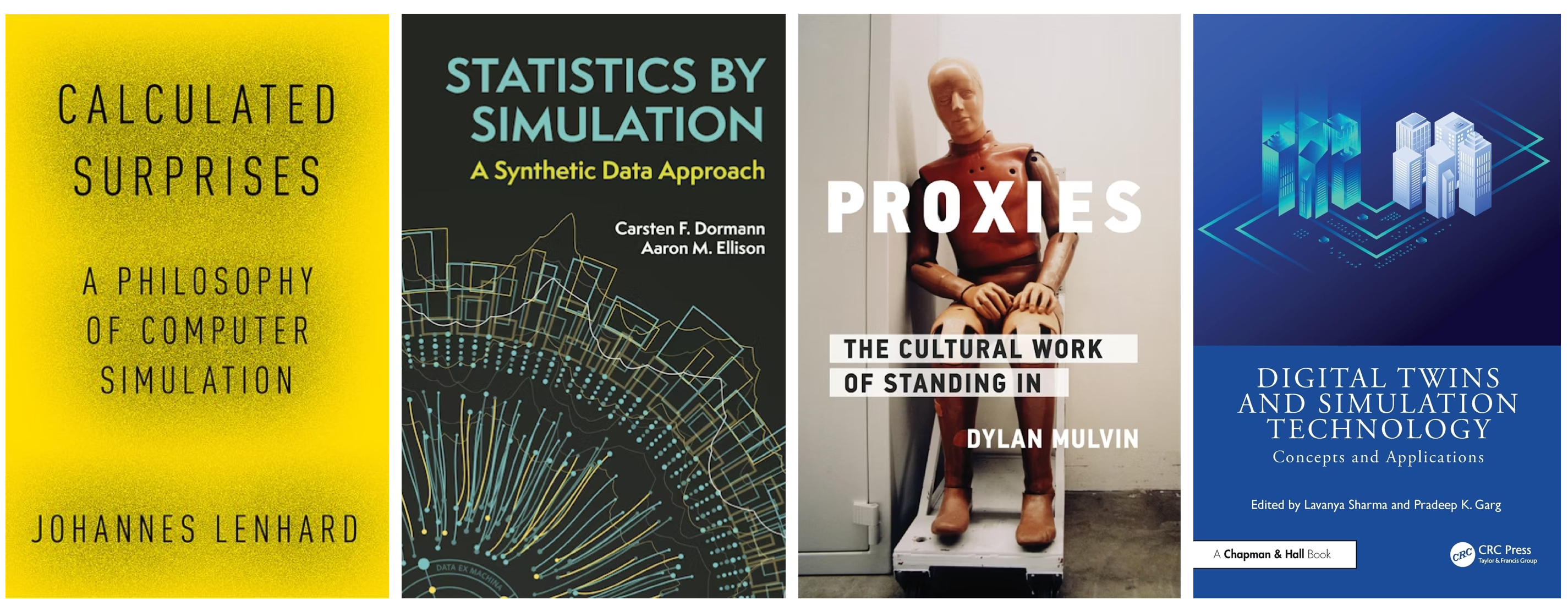
<< Da qualche tempo si è avviata l’era della “simulazione computazionale” con le sue molte opportunità e le sue vulnerabilità (e dovremo costruire anche nuove immunità). Una rivoluzione che ha cominciato ad avere importanti ricadute strategiche. Tra queste, emblematica e trasformativa è l’introduzione e l’adozione da parte di industrie, settori e mercati della pratica del digital twinning (gemellaggio digitale). Ma che cos’è un digital twin, un gemello digitale? Copia, replica, rappresentazione, simulacro del reale? Più in astratto, potremmo dire che è una simulazione computazionale del mondo nel suo prodursi. Simulazione di prodotti, di processi, della stessa produzione in esecuzione e al miglior twinning rate. Ma cos’è più filosoficamente, una simulazione computazionale al di là delle tecnicalità di sensori, dati, algoritmi, protocolli? Possiamo anticipare qui che è un dispositivo epistemico in grado di ridurre lo scarto cognitivo esistente tra mondo (fisico) e modello (matematico). In plasticità epistemica, la simulazione supera -secondo alcuni filosofi della scienza- anche il più vecchio metodo dell’esperimento avviando, così, una sorta di nuova rivoluzione scientifica (e con questa anche di business) con un impatto simile o superiore a quello che ebbe la rivoluzione scientifica del metodo sperimentale di Galileo Galilei. Dunque il digital twin non è semplicemente -come si dice spesso ingenuamente- una replica virtuale o una copia digitale del mondo. Queste simulazioni diagnostico-prognostiche (on-board e off-board) di asset fisici e industriali in attività sono proprio una nuova leva strategica, operativa e di business, fondamentale. È, infatti, in questa riduzione dello scarto cognitivo tra modello e mondo che si possono immaginare e produrre nuove opportunità di cocreazione di valore e nuove dinamiche di servizio potenzialmente anche più sostenibili. Forse allora l’umano che nascerà dall’impiego dei gemelli digitali (es. dei pazienti) sarà nuovo tanto quanto lo fu l’umano nato dall’impiego delle dissezioni cadaveriche. Pensiamo a Leonardo da Vinci. Mutatis mutandis, anche in quel caso ci fu un approssimarsi ai corpi che venivano incisi per capire meglio il loro funzionamento. Le dissezioni (anatomiche) verranno sostituite dalle simulazioni (algoritmiche)? Sensori e simulazioni, dunque, al posto di bisturi e illustrazioni? D’altro canto abbiamo già usato in passato avatar analogici per creare esperienze migliorative del mondo. Pensiamo ai manichini sensorizzati (proxies) usati nei crash test su cui costruiamo esperienze di guida più sicure. Così magari in futuro useremo avatar digitali per costruire nuove esperienze. Con creazione di valore e di rischio naturalmente. Un business che voglia orientarsi al ed essere orientato dal digital twin richiederà a imprese e manager di familiarizzare strategicamente con questa rinnovata filosofia simulacrale >> (Accoto 2025)
< È opinione comune che bisogna ‘governare la tecnologia’. Da ultimo, in ordine di tempo, quella dell’intelligenza artificiale. A fronte delle arrischiate uncanny valley che stiamo attraversando (e anche già abitando), si sollevano richieste accorate di mettere a governo (giuridico, etico, sociale, politico…) le ondate tecnologiche in essere e in divenire (intelligenze artificiali, monete crittografiche, macchine quantistiche ad es). Vulnerabilità e rischi di varia natura sono i fattori scatenanti queste volontà normative catecontiche. Certo, c’è un che di condivisibile e consolante (e di giusto anche) in questi richiami alla governabilità della dimensione tecnica. E, tuttavia, mi sembra però anche che queste esortazioni governamentali palesino tutte, in fondo, una certa naïveté culturale e filosofica. In che senso diciamo che la tecnologia è governabile? A quali condizioni immaginiamo si possa governare? Come, quando e per cosa e per chi deve essere sottoposta a governo la tecnica? Le sue fondazioni o le sue applicazioni? Le innovazioni del presente o le loro conseguenze all’orizzonte? E che dire dell’economia politica della tecnica? È solo ingegneria o è anche e soprattutto politica? Va da sé che, se la tecnologia necessita di regole, è perché è ritenuta o incapace di auto-governo (inabilità) oppure addirittura proprio renitente al governo (indisponibilità). L’ingovernabilità è temuta e negata. In tutti i casi, la governabilità è data e presupposta. La tecnologia è governabile, si può governare e si deve governare. E così sempre più principi, valori, modelli, leggi, regole, pratiche sono evocati dall’esterno per incatenare una tecnica scatenata. Con un paradosso ultimo, la cibernetica, scienza massima del controllo, richiederebbe di essere a sua volta controllata. Ma è proprio così? E se si, come fare? I filosofi sanno bene le molte e diverse complessità e ambiguità proprie del katéchon, cioè del potere invocato a contenere il caos … > (Accoto 2025)
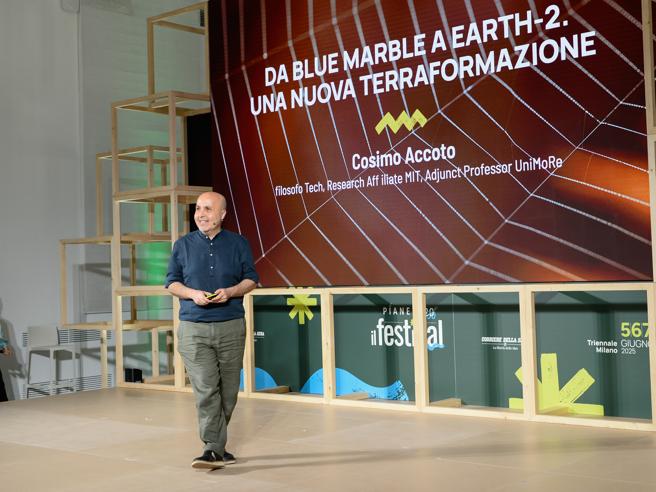
Ospite del Corriere della Sera in Triennale e in diretta streaming su Corriere TV, il mio intervento plenario al Festival Pianeta 2030 per esplorare la nuova intelligenza della planetarietà. Tra green coding e software sustainability, environmental sensing e planetary twinning, low-orbit communication e outer space ethics, un viaggio dentro una nuova terraformazione. Da Blue Marble a Earth-2, il mio racconto evocativo tra intelligenza artificiale e intelligenza planetaria … Un grazie agli organizzatori per l’invito e gli apprezzamenti finali. Ci rivedremo presto con nuove iniziative sull’orizzonte planetario che ci attende!

 cosimoaccoto.com