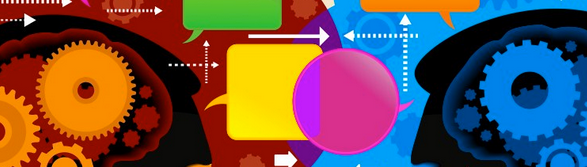
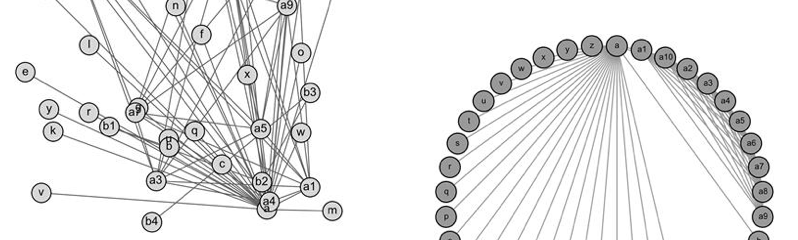
“Social media has become the dominant method of using the Internet, and it has infiltrated and changed the way millions of people interact and communicate. Social networking in particular has become extremely popular, with over one billion users on Facebook alone and billions more accounts across thousands of social networking sites online. Understanding social networks—both those explicitly formed on social networking websites and those implicitly formed in many other types of social media—has taken on new importance in light of this astounding popularity. Analysis of these social connections and interactions can help us understand who the important people are in a network, what roles a person plays, what subgroups of users are highly interconnected, how things like diseases or rumors will spread through a network, and how users participate. Applications of these analyses are extensive. Organizations can prevent or control the spread of disease outbreaks. Websites can support participation and contributions from many types of users. Businesses can provide immediate assistance to customers who have problems or complaints. Users can band together to better understand their communities and government or take collective action” (from “Analyzing the Social Web”, Golbeck, 2013; image from the book)
“So code is speaking us” (Cox, Speaking Code, 2013) #code
“Future and interaction: this is the task (or the destiny) of code. So code is “ speaking ” us. Geoff Cox is trying to show the other side of the moon: if we can say that code is speaking us (pervading and formatting our action), the other way round is also true. We are speaking code in many ways. In the beginning someone is writing the code, and others are supposed to submit themselves to the effects of the code written by someone. Power is more and more inscribed in code. Writing to Thomas Sebeok, Bill Gates once remarked that “ power is making things easy ” (quoted by Arthur Kroker and Michael A. Weinstein in Data Trash , 1994). Code and interfaces: interfaces are supposed to make the complexity of the code easy, but code in itself is more often about simplifying technical procedures of social life, particularly of economic production and exchange. So code is speaking us, but we are not always working through the effects of written code. More and more we are escaping (or trying to escape) the automatisms implied in the written code” (Cox, “Speaking Code. Coding as Aesthetic and Political Expression”, The MIT Press, 2013)
This new era of interface designs is transforming the use of the city (cit)
“Lately, that aggregation has been changing. There has been an invasion of glowing rectangles—ever more computer screens of ever more sizes, in ever more places.1 And not just an invasion of screens but also one of networked objects, sensor fields, positional traces, information shadows, and “big data.” This new era of interface designs is transforming the use of the city. Car and bike share systems for instance, would not have worked as well before now. Also on the rise are do-it-yourself applications and installations to monitor, tag, catalog, or curate everything from local plants to historical images to neighborhood lore. Many of these productions are said to “augment” their immediate surroundings, not just fill them with feeds and pointers to someplace else. Yet however much augmented, the city is also unmediated experience: fixed forms persist underneath all these augmentations and data flows, and for that you might be thankful” (from McCullough, “Ambient Commons. Attention in the Age of Embodied Information, The MIT Press, 2013)
when an actual, physical body has been replaced by a string of running data? #bigdata
“In days of intense and pervasive digitalization, the numerification of movement requires a broader thinking, or perhaps a rethinking, of what movement itself is (or what it can become). And it is precisely this rethinking that is at stake here: Can it still be defined or thought as movement, when an actual, physical body has been replaced by a string of running data? What happens to the thought of movement, when movement is processed by a digital system? [..] In motion capture and animation software, what we have thought as the infinite virtuality of movement thus becomes visualized as a series of algorithmic paths traced by points, the points in turn resulting from the calculation of parameters and their relations. The program only seems able to remember and manipulate movement’s limited physical possibilities, rather than its infinite potential: for the computer, infinity becomes a number, or a string of numerical data expressed in binary code. But is this string of data, the points and lines remembered by the technology, really ontologically different from a virtual body? Or can the digital variables preserved and manipulated by the program (as variations based on relations that remain constant in the computer’s algorithm), stand for what Deleuze defines as the virtual “variety” of ideas or, as he also defines it, a variation of relations themselves, which is ultimately for him the object of a transcendental (rather than empirical) memory? ” ( from “Moving without a Body. Digital Philosophy and Choreographic Thoughts”, Stamatia Portanova, The MIT Press, 2013)
“their products are nothing but data” (Semmelhack, 2013) #bigdata
“Tomorrow successful product designers will understand that their creations can never again exist in isolation. They will need to survive on a network. They must switch effortlessly between serving end users and developers equally well. They will need to deeply internalize that their products are nothing but data. But with this challenge comes an unprecedented opportunity to radically alter the very definition of what a product is, as well as the value that it can provide to the world. Pip Coburn, author of the book The Change Function, argues that people today feel naked without data. That is, we have become so used to having a universe of information in our pocket/purse/bag in the form of a mobile phone that when we are without it, we feel vulnerable, unprepared, or even disrobed. The fascinating thing about this is that the idea makes sense only if you think about it terms of online data. In reality, you’re surrounded by information and data 24/7; you have been since you were born. It’s information made available through your five senses (and sometimes your sixth’s that sense of intuition we all have and that’s especially strong in mothers). But for some reason, that type of data is boring to a lot of people at least for the moment. On the other hand, the data available via LinkedIn, Twitter, or Yelp is far more interesting (for now). Elevating social machines to the level of social peers can and will change this; these social machines will become both conduit and catalyst” (from Semmelhack, “Social Machines”, 2013).
people analytics is poised for a revolution… (cit.) #bigdata
“Today, people analytics is poised for a revolution, and the catalyst is the explosion of hard data about our behavior at work. This data comes from a wide variety of sources. Digital traces of activity from e-mail records, web browsing behavior, instant messaging, and all the other IT systems we use give us incredibly detailed data on how people work. Who communicates with whom? How is IT tool usage related to productivity? Are there work styles that aren’t well-supported by current technology? Although this data can provide amazing insights, it’s only the digital part of the story. Data on the physical world is also expanding at a breakneck pace thanks to the rapid development of wearable sensing technology. These sensors, from company ID badges to cell phones to environmental sensors, provide reams of fine-grained data on interaction patterns, speaking patterns, motion, and location, among other things. Because most communication and collaboration happens face to face, this data is critical for people analytics to take that next leap forward and become a transformative organizational tool. By combining precise data from both real and virtual worlds, we can now understand behavior at a previously unimaginable scale” (from the Preface to “People Analytics”, Waber, FTPress, 2013)
databases have recapitulated social and organizational developments #bigdata
“Database development has followed this vein. The early databases were hierarchical – you needed to go down a detailed line of authority each time you wanted to retrieve a datum. Then we had relational databases, where there was still central control but much more flexible access (the database system, like society at the time, was seen as a fixed structure). Today we have moved into a world of object-oriented and object-relational databases, in which each data object lives in a Tardean paradise — any structure can be evanescent providing we know the inputs or outputs of any object within it. So databases have recapitulated social and organizational developments. And many organizations changed in the 1990s and 2000s in an effort to become more “ object-oriented ” ; forgetting that the first object-oriented language (Simula, a precursor to Smalltalk) attempted to model work practice. Along the way, we have conceived ourselves and the natural entities in terms of data and information. We have flattened both the social and the natural into a single world so that there are no human actors and natural entities but only agents (speaking computationally) or actants (speaking semiotically) that share precisely the same features. It makes no sense in the dataverse to speak of the raw and the natural or the cooked and the social: to get into it you already need to be defined as a particular kind of monad” (“Data Flakes”, Geoffrey C. Bowker, in “Raw Data is an Oxymoron”, 2013, The MIT Press, p. 169)
Governing Algorithms: A Provocation Piece (2013) #bigdata
“This provocation piece addresses the recent rise of algorithms as an object of interest in research, policy, and practice. It does so through a series of provocations that aim to trouble the coherence of the algorithm as an analytic category and to challenge some of the assumptions that characterize current debates. The goal of this piece is thus to stimulate discussion and provide a critical backdrop against which the Governing Algorithms conference can unfold. It asks whether and how we can turn the “problem of algorithms” into an object of productive inquiry” (Barocas et alii, 2013).
http://papers.ssrn.com/sol3/papers.cfm?abstract_id=2245322
Social Science in the Era of #BigData (by Gonzalez-Bailon, pdf)
Abstract: Digital technologies keep track of everything we do and say while we are online, and we spend online an increasing portion of our time. Databases hidden behind web services and applications are constantly fed with information of our movements and communication patterns, and a significant dimension of our lives, quantified to unprecedented levels, gets stored in those vast online repositories. This article considers some of the implications of this torrent of data for social science research, and for the types of questions we can ask of the world we inhabit. The goal of the article is twofold: to explain why, in spite of all the data, theory still matters to build credible stories of what the data reveal; and to show how this allows social scientists to revisit old questions at the intersection of new technologies and disciplinary approaches. The article also considers how Big Data research can transform policy making, with a focus on how it can help us improve communication and governance in policy-relevant domains (Gonzalez-Bailon, 2013)