Big Data and Marketing Metrics (2013)

“Recent empirical studies show that successful companies are distinguished by their ability to use “big data” for strategic decision-making at senior-level (Brown et al., 2011; LaValle et al., 2011; Manyika et al., 2011; Shah et al. 2012). What is missing is a study that thoroughly explores and defines the phenomenon of metrics in the context of “big data” and that provides a holistic investigation of the interdependent role of marketing metrics and financial metrics for senior-level management within the current information and technological landscape. A research agenda is suggested to study whether senior-level managers are guided by a set of marketing metrics or whether the traditional financial metrics still dominate in organisations. In particular, this agenda explores five research challenges that deserve the attention of current and future marketing research”

134204385742Lamest_and_Brady_IAM_2012_Big_Data_and_the_Challenge_of_Marketing_Metrics_ML

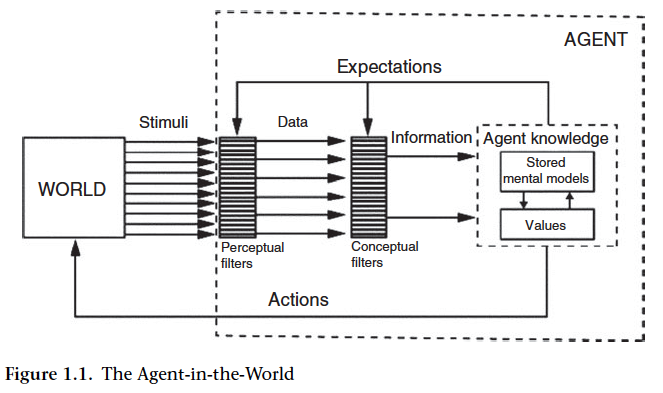
Data/Information/Knowledge: a Boisot view

The distinction between data/information/knowledge remains tipically vague. The Boisot scheme help us to frame the distinction. “Data can be treated as originating in discernible differences in physical states of the world—that is, states describable in terms of space, time, and energy…Information constitutes those significant regularities residing in the data that agents attempt to extract from it…Finally, knowledge is a set of expectations held by agents and modified by the arrival of information. These expectations embody the prior situated interactions between agents and the world—in short, the agent’s prior learning” (Boisot)

Schermata_01-2456297_alle_11

Bad Data (O’Reilly Media, 2013)

“We all say we like data, but we don’t. We like getting insight out of data. That’s not quite the same as liking the data itself. In fact, I dare say that I don’t quite care for data. It sounds like I’m not alone. It’s tough to nail down a precise definition of “Bad Data.” Some people consider it a purely hands-on, technical phenomenon: missing values, malformed records, and cranky file formats. Sure, that’s part of the picture, but Bad Data is so much more. It includes data that eats up your time, causes you to stay late at the office, drives you to tear out your hair in frustration. It’s data that you can’t access, data that you had and then lost, data that’s not the same today as it was yesterday… In short, Bad Data is data that gets in the way. There are so many ways to get there, from cranky storage, to poor representation, to misguided policy. If you stick with this data science bit long enough, you’ll certainly encounter your fair share”

http://www.amazon.com/Bad-Data-Handbook-Cleaning-Back/dp/1449321887/ref=sr_1_…

Raw data is an oxymoron (The MIT Press, 2013)

“We live in the era of Big Data, with storage and transmission capacity measured notjust in terabytes but in petabytes (where peta– denotes a quadrillion, or athousand trillion). Data collection is constant and even insidious, with every click and every”like” stored somewhere for something. This book reminds us that data is anything but”raw,” that we shouldn’t think of data as a natural resource but as a cultural one thatneeds to be generated, protected, and interpreted. The book’s essays describe eight episodes in thehistory of data from the predigital to the digital. Together they address such issues as the waysthat different kinds of data and different domains of inquiry are mutually defining; how data arevariously “cooked” in the processes of their collection and use; and conflicts over whatcan — or can’t — be “reduced” to data. Contributors discuss the intellectual history ofdata as a concept; describe early financial modeling and some unusual sources for astronomical data;discover the prehistory of the database in newspaper clippings and index cards; and consider contemporary “dataveillance” of our online habits as well as the complexity of scientificdata curation”

http://www.amazon.com/Raw-Data-Is-Oxymoron-Infrastructures/dp/0262518287 

Business Intelligence and analytics: a review

“Business intelligence and analytics (BI&A) has emerged as an important area of study for both practitioners and researchers, reflecting the magnitude and impact of data-related problems to be solved in contemporary business organizations. This introduction to the MIS Quarterly Special Issue on Business Intelligence Research first provides a framework that identifies the evolution, applications, and emerging research areas of BI&A. BI&A 1.0, BI&A 2.0, and BI&A 3.0 are defined and  described in terms of their key characteristics and capabilities. Current research in BI&A is analyzed and challenges and opportunities associated with BI&A research and education are identified.  We also report a bibliometric study of critical BI&A publications, researchers, and research topics based on more than a decade of related academic and industry publications. Finally, the six articles that comprise this special issue are introduced and characterized in terms of the proposed BI&A research framework”


http://www.misq.org/skin/frontend/default/misq/pdf/V36I4/SI_ChenIntroduction.pdf

Enterprise analytics (Davenport, 2012)

Organizations are capturing exponentially larger amounts of data than ever, and now they have to figure out what to do with it. Using analytics, you can harness this data, discover hidden patterns, and use this knowledge to act meaningfully for competitive advantage. Suddenly, you can go beyond understanding “how, when, and where” events have occurred, to understand why – and use this knowledge to reshape the future. Now, analytics pioneer Tom Davenport and the world-renowned experts at the International Institute for Analytics (IIA) have brought together the latest techniques, best practices, and research on analytics in a single primer for maximizing the value of enterprise data.

http://www.ftpress.com/store/enterprise-analytics-optimize-performance-proces… 

Trasforming business (big data and beyond, 2013)

“Based on the findings of an extensive research project that surveyed more than 5,500 enterprise employees and functional decision makers across the United States and China, Transforming Business: Big Data, Mobility and Globalization explores the influence of technology in the workplace and the implications to company culture, functional responsibilities and competitive advantage. This in-depth analysis illuminates emerging technological trends, the changing workforce, and the shifting face of business and industry while offering prescriptive guidance to leaders”

http://media.wiley.com/product_data/excerpt/8X/11185196/111851968X-49.pdf

Big Data (a book preview, 2013)

“The data we deal with is diverse. Users create content like blog posts, tweets, social network interactions, and photos. Servers continuously log messages about what they’re doing. Scientists create detailed measurements of the world around us. The internet, the ultimate source of data, is almost incomprehensibly large. This astonishing growth in data has profoundly affected businesses. Traditional database systems, such as relational databases, have been pushed to the limit. In an increasing number of cases these systems are breaking under the pressures of “Big Data.” Traditional systems, and the data management techniques associated with them, have failed to scale to Big Data”

http://www.manning.com/marz/BD_meap_ch01.pdf


The rise of marketing/market research (2012)

“As the complexity of markets is too great for any individual to understand, intermediaries and interpreters who concentrate on a limited number of the markets’ core features are needed. Their work, which bridges the gap between the subsystems of markets and corporations, is generally called marketing. Marketing tries to process information on markets and translate it into a language that corporations can use to steer their activities. It is about reconciling the imperatives of production  with the needs and desires of customers. The agency of consumers generates insecurity among marketers, who have to develop methods to overcome information asymmetries. This task calls for professional, even scientific expertise, as well as special instruments and institutions”

http://www.amazon.com/Marketing-Market-Research-Worlds-Consumption/dp/0230341…