
[…] The Ontology of Digital Data. Digital data is formless, plastic and leveling. Stored as binary bits, it has no form as such. As Justin Clemens and I have written (2010), ‘Data is data. Data is absolutely not a phenomenological thing. It cannot be experienced as such, like Aristotelian prime matter. Unlike Aristotelian prime matter, however, we can manipulate data with ease.’ The fundamentally plastic nature of digital data is what allows us to manipulate it, but until we do manipulate it – until we modulate it into some kind of display register – any set of digital data is indistinguishable from any other set of digital data, until modulated into a display register, and this is the leveling nature of digital data. All information is reduced to an indistinguishable set of binary bits. To illustrate this, consider a digital image, such as may have been taken by a digital camera of a material scene. Once this visual information is stored as digital data, it can then be opened in, for example, a sound editing program and played as sound. It could equally be used as input to determine a height-map in a realtime 3D environment. The point is that once it is stored as digital data, it loses any determining connection with its semantic source. Therefore, as I said above, parameters must be rigorously established that govern how any given digital data is de- and re-modulated. The notion of protocols or standardised processes that abound in the contemporary technical sphere (such as govern the internet, image compression, audio reproduction and so on) are expressions of this codification of parameters – both sides of a modulation exchange agree to adhere to a set of parameters in order that the intended result is achieved. Naturally, once protocols are required, questions of intentionality, ideology and cultural convention arise. […] (from “Affect and the Medium of Digital Data”, by Adam Nash, The FibreCulture Journal, 2012)

“… instead of focusing on bodies in space, the new forms of observation focus on detecting and predicting the emergence of specific patterns of code” #bigdata #code #database #datapolitics
[…] “One of the key characteristics of the new forms of observation, as pointed out above, is that they are pre-emptive (Massumi 2009, 167), that is, they are aimed at anticipating actions before they actually occur. In short, the new forms of observation are characterized by the fact that they aim to recognize patterns of code generated on the machine level. This code is produced whenever we do something, or are observed doing something, by way of a digital machine, whether this be our action as the action of an individual, or our action as part of a population, or, indeed, both. It is significant that this form of observation does not operate in perspectival space, which is in direct contrast to how observation functions in the disciplinary machine. As I briefly touched on above, discipline organizes spaces so as to produce specific forms of conduct. One of the key elements in making spaces work – making them productive – is precisely the use of the instrument of hierarchical observation, as Foucault’s example of the panopticon demonstrates so well. However, rather than looking through or behind something, the new forms of observation always project onto a screen (Bogard 1996, 21), and, indeed, when no humans are involved screens themselves are superfluous. In short, instead of focusing on bodies in space, the new forms of observation focus on detecting and predicting the emergence of specific patterns of code. Since they are not spatial, nor are necessarily aimed at modifying an individual’s behavior, it suggests that they form part of a very different mechanism of power. For this reason that first mechanism can usefully be termed the recognition of patterns, and it is a key mechanism in the modulatory mode of power” (Savat, Uncoding the Digital, Palgrave, 2013)

“Entangling mobility and interactions in social media” #socialmobile #locationintelligence #bigdata #analytics
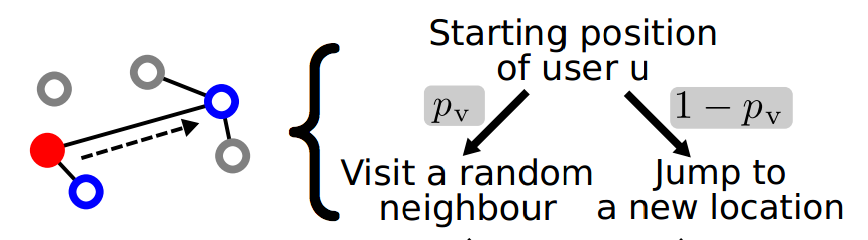
“Daily interactions naturally de ne social circles. Individuals tend to be friends with the people they spend time with and they choose to spend time with their friends, inextricably entangling physical location and social relationships. As a result, it is possible to predict not only someone’s location from their friends’ locations but also friendship from spatial and temporal co-occurrence. While several models have been developed to separately describe mobility and the evolution of social networks, there is a lack of studies coupling social interactions and mobility. In this work, we introduce a new model that bridges this gap by explicitly considering the feedback of mobility on the formation of social ties. Data coming from three online social networks (Twitter, Gowalla and Brightkite) is used for validation. Our model reproduces various topological and physical properties of these networks such as: i) the size of the connected components, ii) the distance distribution between connected users, iii) the dependence of the reciprocity on the distance, iv) the variation of the social overlap and the clustering with the distance. Besides numerical simulations, a mean- eld approach is also used to study analytically the main statistical features of the networks generated by the model. The robustness of the results to changes in the model parameters is explored, finding that a balance between friend visits and long-range random connections is essential to reproduce the geographical features of the empirical networks” (from “Entangling mobility and interactions in social media”, 2013)
The Value of #BigData in Digital Media Research #socialdata #digitalresearch #analytics
“[…] While we do not argue that deriving measurement concepts from data rather than theory is problematic, per se, researchers should be aware that the most easily available measure may not be the most valid one, and they should discuss to what degree its validity converges with that of established instruments. For example, both communication research and linguistics have a long tradition of content-analytic techniques that are, at least in principle, easily applicable to digital media content.Of course, it is not possible to manually annotate millions of comments, tweets, or blog posts. However, any scholar who analyzes digital media can and should provide evidence for the validity of measures used, especially if they rely on previously unavailable or untested methods. The use of shallow, ‘‘available’’ measures often coincides with an implicit preference for automatic coding instruments over human judgment. There are several explanations for this phenomenon: First, many Big Data analyses are conducted by scholars who have a computer science or engineering background and may simply be unfamiliar with standard social science methods such as content analysis (but some are discussing the benefits of more qualitative manual analyses; Parker et al., 2011). Moreover, these researchers often have easier access to advanced computing machinery than trained research assistants who are traditionally employed as coders or raters […] (from “The Value of Big Data in Digital Media Research”, by Merja Mahrt & Michael Scharkow, 2013)
http://www.tandfonline.com/toc/hbem20/57/1#.UfLSd2S9-IU

reading “The Art of Data Center” (by Douglas Alger, 2013)
“Welcome to the engine rooms of the Internet. Filled with rows of sophisticated computing equipment, massive air conditioners and elaborate electrical systems, Data Centers power the Internet, foster productivity, and drive the global economy. They’re also flat out cool—ultramodern technology chambers with peta-flops of processing and megawatts of electrical capacity. I began working in Data Centers more than 15 years ago, first stocking supplies and inventorying hardware, and eventually designing and managing dozens of these specialized computing environments for Cisco. I also visited hundreds of other Data Centers during those years, taking tours and chatting with their designers and managers whenever possible. Data Center folks are all trying to wrestle the same set of physics to the ground, and I’m always curious to see what elegant (or maybe not so elegant) solutions people have implemented. The idea for The Art of the Data Center originated in 2009 while I was working on a different book, Grow a Greener Data Center . I was writing about geothermal cooling and wanted to provide examples of Data Centers constructed underground and discovered Bahnhof’s co-location facility in Stockholm. Housed in a former nuclear bunker, it was dubbed “The James Bond Villain Data Center” by several technology websites thanks to unique features such as man-made waterfalls and a glass-walled conference room that looms over its data hall. I smiled at the cinematic touches such as dramatic lighting and artificial fog and wished I knew more about it” (from the Preface, The Art of Data Center, 2013)
Social Data Maturity by Altimeter #socialdata #bigdata #socialintelligence #sbi
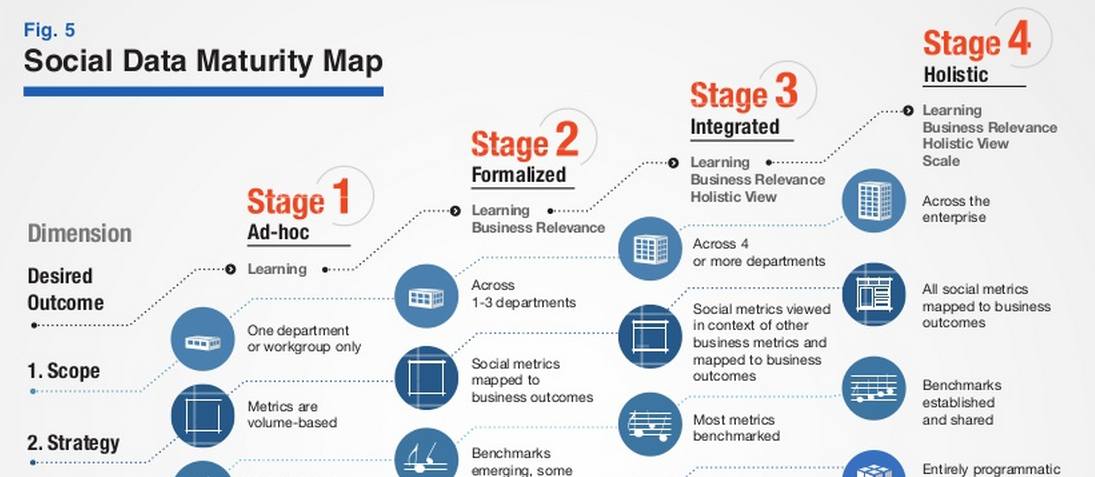
“According to Altimeter Group research, the average enterprise-class company owns 178 social media accounts, while 13 departments—from marketing to customer support to legal– actively engage in social media. Yet social media— and as a result, social data— are still largely isolated from business-critical enterprise data sourced from platforms such as Customer Relationship Management, Business Intelligence and market research. This lack of a holistic view of social signals in the context of other enterprise and external data can lead to partially-informed decisions, missed opportunity, and increased risk and cost, as the organization makes decisions without the benefit of critical input from external constituencies. In this Altimeter Group research report reflecting input from 35 enterprise-class organizations and technology ecosystem contributors, industry analyst Susan Etlinger lays out an imperative for Social Data Intelligence, identifying key dimensions that organizations must understand, pragmatic steps they can take toward mature integration, and how successful businesses are already using social data in the context of other critical enterprise data to drive measurable value throughout the organization (Altimeter Grouo, July 25 2013)
Social Employee #roi #socbiz #socialbusiness #analytics #sbi #bigdata
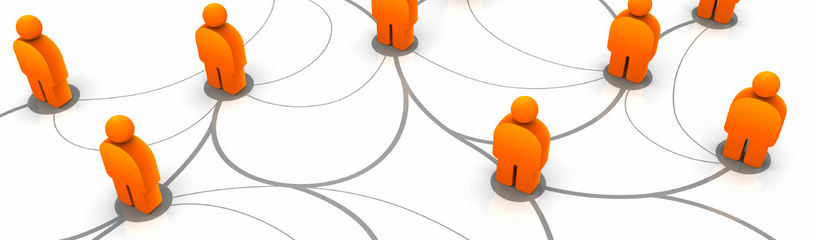
” […] It’s important to note here, however, that even though brands are finding proven ways to measure the ROI of social endeavors, it is generally agreed that ROI, in some ways, is beside the point. When talking about social business, the discussion refers to building a culture of empowered, engaged social employees who are as confident working collaboratively as they are working independently. Social business, then, is a long-term game plan for corporate sustainability, accountability, and transparency. The benefits of social business grow exponentially—and will continue to be felt for generations to come. Thinking simply in terms of ROI is, quite frankly, far too narrow a view when experiencing nothing short of a cultural revolution […] “from the Social Employee, 2013” (Burgess and Burgess, “The Social Employee”, 2013, p.30)

Databases and Time #bigdata #socialdata #
“I understand the temporality of database aesthetics as a system that may re-present the past, a system that may make the past present again. But not in the sense that is merely reconfigured by a technological process. Here I do not picture the past as an outside to be grasped by the database and organized. Rather I view the database as a process. Importantly, this is a process that not only changes the information that it archives but is also generative of a particular type of presentness in which the information is accessed. This is a process that brings pastness and presentness; a process that does not sit outside or beyond the everyday life, but rather a system that is involved in a process with everyday life; a system that is necessarily temporal” (p. 161-162) in Time and the Digital: Connecting Technology, Aesthetics and a Process Philosophy of Time, by Timothy Scott Barker; 2013, University Press of England)
See in particular, chapter 8 “DATABASES AND TIME”
• Multi-temporality and Frames
• Organizing Temporality
• Events and the Archive
• The Database in Time
• The Database and Temporal Relationships
• Reterritorializing Data
• Databases and the Extension of Occasions

social ties of employees and information flow in Yammer #bigdata #socialbiz #socialbusinessintelligence #analytics
[Abstract] As popular social media have been adopted by corporations for professional sharing and internal communication, ties are strengthened in the network as employee users communicate frequently with each other on work practices. On the other hand, the company hierarchy connects and governs users in a way that shapes the pattern of posting activity, interactions and enacted topics. In this paper, we investigate social ties of employees and information flow in Yammer communication by quantifying the effect of company hierarchy with experiments on a large-scale real dataset…”
http://www-scf.usc.edu/~ketansin/673/CSCI_673_Project_Paper.pdf
 cosimoaccoto.com