Too big to ignore (deloitte review, issue 12 | 2013)

Schermata 03-2456361 alle 19.41.45


http://dupress.com/articles/too-big-to-ignore/

“Much of the language surrounding big data conveys a muddled conception of what data, “big” or otherwise, means to the majority of organizations pursuing analytics strategies. Big data is shrouded in hyperbole and confusion, which can be a breeding ground for strategic errors. Big data is a big deal, but it is time to separate the signal from the noise” (from Deloitte Review, 12, 2013)

Big data in a business perspective


Schermata 03-2456361 alle 17.02.54

According to Bill Franks, author of “Taming the Big Data” (2012): “Organizations need to jump in and start leveraging it today. There is no reason to delay. While there will certainly be bumps in the road and some resistance to change, it is entirely possible to tame big data starting right now. Whether it is text data or web data or sensor data, there are already organizations actively capturing, analyzing, and making decisions based upon it. The organizations that decide to be leaders will uncover new business opportunities and implement new business processes before the followers realize what has happened. It is rare to have a chance to be among the first to enter an entirely new realm of data and analysis. Don’t let your organization miss the chance that is sitting in front of you today. Begin to uncover the ways that the analysis of big data can change how your organization does business. Reap the benefits. What are you waiting for?”

data storage for social networks

“We refer to this property as social locality. Recent works [9, 32] have shown that distributed queries of small data records reduce performance compared to local queries. Therefore, social locality should be taken into account when designing a distributed storage for OSNs. More specifically, data of the users who are socially connected should be stored on servers within short reach from each other. An ideal storage scheme should be socially aware. However, the most prominent distributed storage scheme for OSNs, Cassandra is not socially aware” (Tran, 2013, Data Storage for Social Networks. A Socially Aware Approach, Springer, p.1-2)Schermata 03-2456360 alle 21.47.04

Making the Visual Visible in Philosophy of Science

Schermata 03-2456360 alle 12.08.27

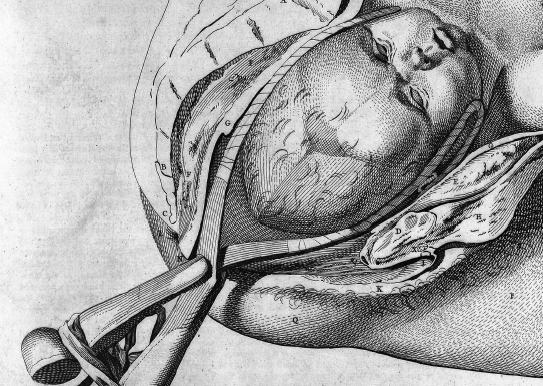
image from “Minds, Bodies and Machines: 1770-1930” (Palgrave, 2011)

“As data-intensive and computational science become increasingly established as the dominant mode of conducting scientific research, visualisations of data and of the outcomes of science become increasingly prominent in mediating knowledge in the scientific arena. This position piece advocates that more aention should be paid to the epistemological role of visualisations beyond their being a cognitive aid to understanding, but as playing a crucial role in the formation of evidence for scientific claims. The new generation of computational and informational visualisations and imaging techniques challenges the philosophy of science to re-think its position on three key distinctions: the qualitative/quantitative distinction, the subjective/objective distinction, and the causal/non-causal distinction” (Carusi,”Making the Visual Visible in Philosophy of Science”, Spontaneous Generations 6:1(2012).

https://mediatropes.com/index.php/SpontaneousGenerations/article/viewFile/16141/15603

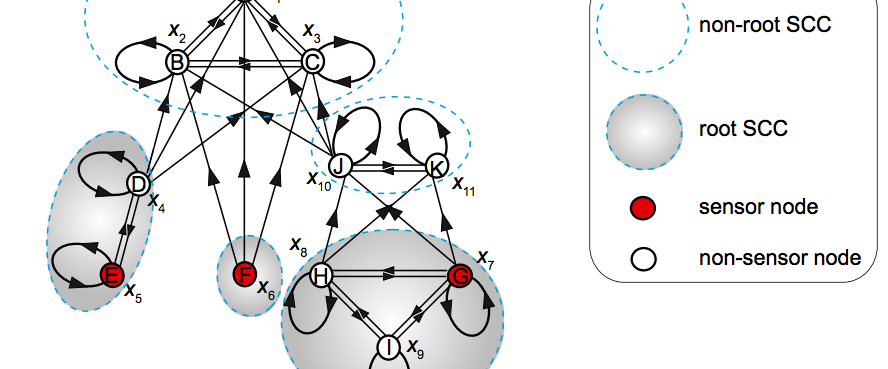
on the observability of a complex system

“The developed approach can also identify the optimal sensors for target or partial observability, helping us reconstruct selected state variables from appropriately chosen outputs, a prerequisite for optimal biomarker design. Given the fundamental role observability plays in complex systems, these results offer avenues to systematically explore the dynamics of a wide range of natural, technological and socioeconomic systems (from the Abstract, “Observability of a complex systems”, 2013, PNAS Early Edition by Yang-Yu Liu, Jean-Jacques Slotine, Albert-László Barabási)

Click to access 201301-28_PNAS-Observability.pdf

Schermata 03-2456359 alle 23.28.15

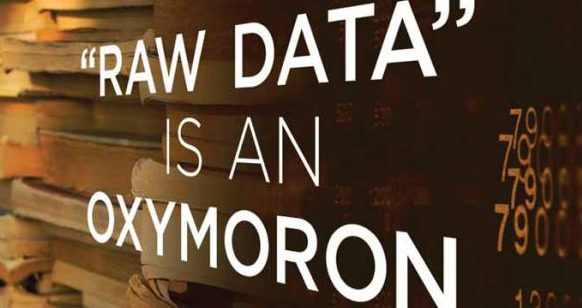
Raw Data is (always) an Oxymoron

“We live in the era of Big Data, with storage and transmission capacity measured not just in terabytes but in petabytes (where peta– denotes a quadrillion, or a thousand trillion). Data collection is constant and even insidious, with every click and every “like” stored somewhere for something. This book reminds us that data is anything but “raw,” that we shouldn’t think of data as a natural resource but as a cultural one that needs to be generated, protected, and interpreted. The book’s essays describe eight episodes in the history of data from the predigital to the digital” (“Raw Data is an Oxymoron”, edited by Gitelman, from the abstract on Amazon, 2013).

http://www.amazon.com/Raw-Data-Is-Oxymoron-Infrastructures/dp/0262518287#reader_0262518287Schermata 03-2456359 alle 22.39.50