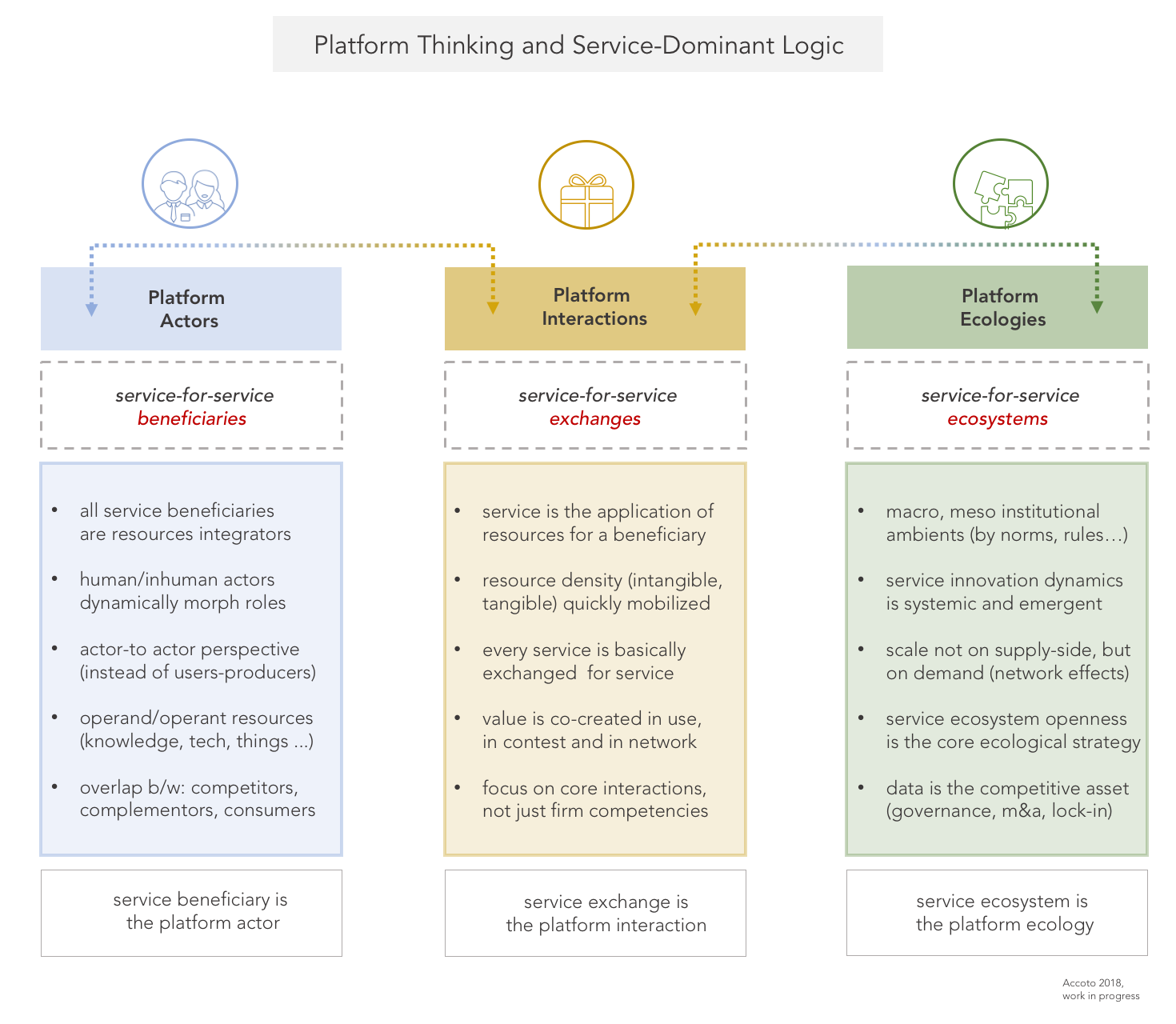
Uscirà a fine 2018, The Handbook of Service-Dominant Logic (2018, 700 pagine) il nuovo volume dedicato alle teorie di Vargo e Lusch sulle dinamiche delle economie service-dominant. Spesso confusa con l’economia dei servizi (che, in molti casi, è ancora economia di prodotti), la prospettiva della “service-dominant logic” rappresenta un passaggio di paradigma concettuale e strategico che le imprese faticano a fare e che, invece, è sempre più urgente. Anche e soprattutto, nella prospettiva di avviare una “platform transformation”. L’impiego e la persistenza di concetti come quelli di fornitore e catena distributiva, di esperienza del consumatore, di creazione e delivery di valore, di prodotto verso servizio rivelano l’incapacità delle imprese di superare effettivamente la vecchia (ancora presente) logica “goods-dominant”. Di più: nella mia esperienza, molte imprese immaginano di trasformarsi in piattaforme (o “platfirm” come le ho ridefinite con un neologismo) senza capire che è necessario affrontare prima una profonda trasformazione nel lessico operativo tanto quanto nel pensiero strategico. Non aiutano, neppure, le riflessioni recenti degli analisti che continuano a parlare, a proposito dei business a piattaforma, di modelli per “connettere i consumatori”. Per citare alcune di queste dimensioni: non utenti o produttori o fornitori, ma tutti “beneficiari di servizio” (beneficiaries); non mera esperienza del consumatore, ma “integrazione di risorse” (resources integration); non delivery a valle del valore prodotto in azienda, ma “cocreazione di valore” contestuale ed emergente tra le parti, nello scambio e nell’uso (value cocreation); non dinamiche di mercati e competitors, ma “ecosistemi di servizio” (service ecosystems) allargati anche alle dimensioni socio-istituzionali; non semplici interazioni e transazioni in piattaforma, ma “scambio di servizio” (service exchange) dinamico tra beneficiari. Occorre cominciare a scardinare i limiti del nostro linguaggio (che come scriveva Wittgenstein sono conseguentemente i limiti del nostro mondo). E della possibilità di immaginare il nuovo. In attesa nel nuovo libro, si possono leggere i libri fondativi precedenti o le presentazioni scaricabili sul sito della service-dominant logic (sito)